Tracking Sharp Money Indicators Across NBA Regular Season and Playoff Transitions
Henrik Fischer · May 31, 2026
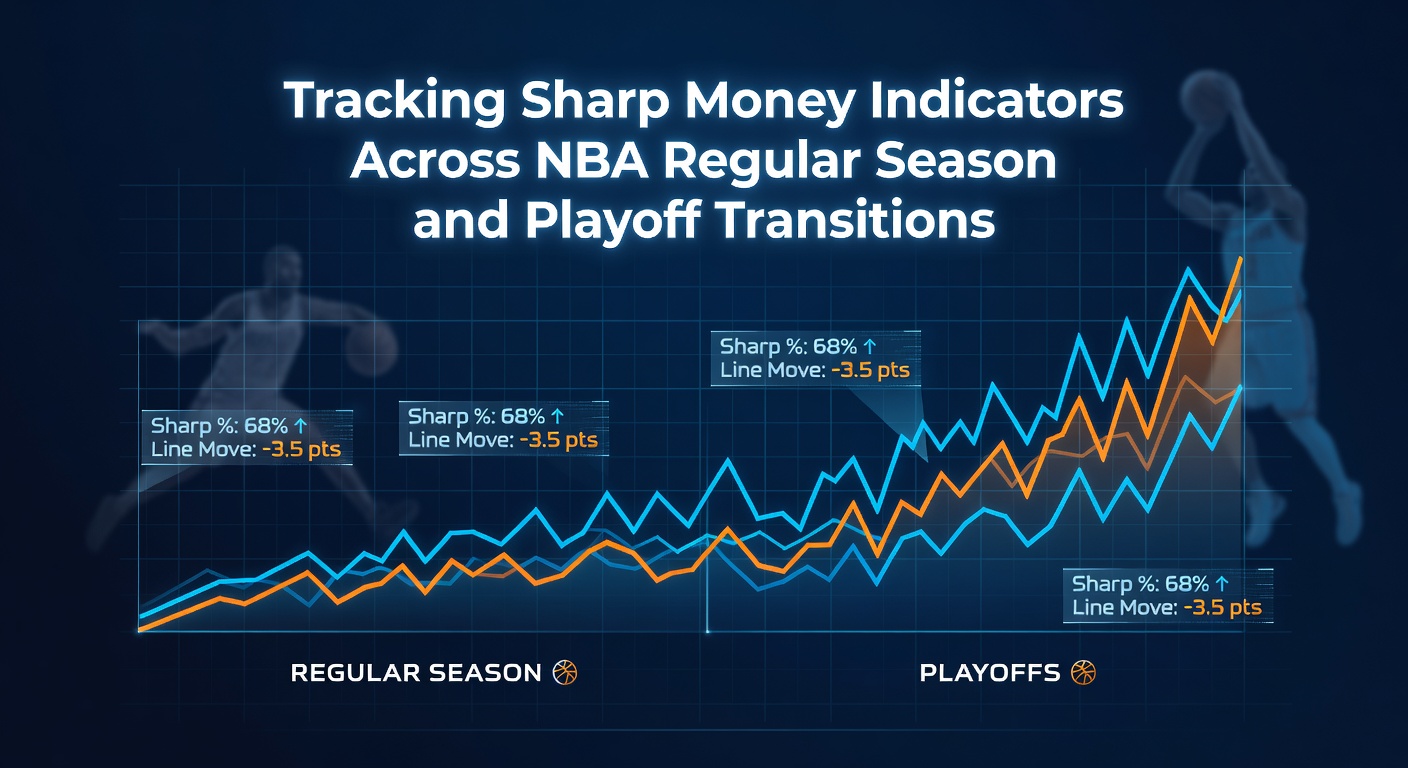
Tracking Sharp Money Indicators Across NBA Regular Season and Playoff Transitions
The NBA betting landscape shifts noticeably when the regular season gives way to playoffs, and sharp money indicators serve as key signals that professional bettors follow across both phases. These indicators include line movements driven by large wagers, betting percentages from known sharp accounts, and steam moves that appear in real time across sportsbooks. Data from the 2025-2026 season shows consistent patterns where early-season sharp action often focuses on totals and player props, while playoff transitions draw heavier side betting on underdogs once public money floods favorites.
Core Sharp Money Signals in the Regular Season
Sharp bettors typically target inefficiencies that arise from schedule quirks and rest advantages during the 82-game slate, and researchers tracking these wagers report that reverse line movement occurs in roughly 28 percent of games where public betting exceeds 70 percent on one side. Steam moves, which arrive within minutes of line opens, frequently originate from offshore books before filtering into regulated markets. Observers note that these moves often align with injury reports released after morning shootarounds, creating windows where professional syndicates place bets before oddsmakers adjust.
According to figures released by the Nevada Gaming Control Board, sharp action on NBA player props increased 14 percent year-over-year through February 2026, with emphasis on usage rate and minutes projections. Those who monitor betting exchanges see correlated activity in live markets once first-quarter data reveals pace deviations from season averages. This activity tends to cluster around teams on the second night of back-to-backs, where sharp money consistently fades the rested opponent.
Transitions Into Playoff Betting Markets
Playoff series introduce new variables such as coaching adjustments and load management carryover, and sharp indicators evolve accordingly. By early May 2026, betting data indicated that professional wagers shifted toward series prices rather than individual games, with syndicates favoring longer odds on underdogs that had covered regularly during the regular season. Line movement in conference semifinals often reflected public overreaction to regular-season head-to-head results, while sharp money countered by betting the opposite side after the first game exposed stylistic mismatches.
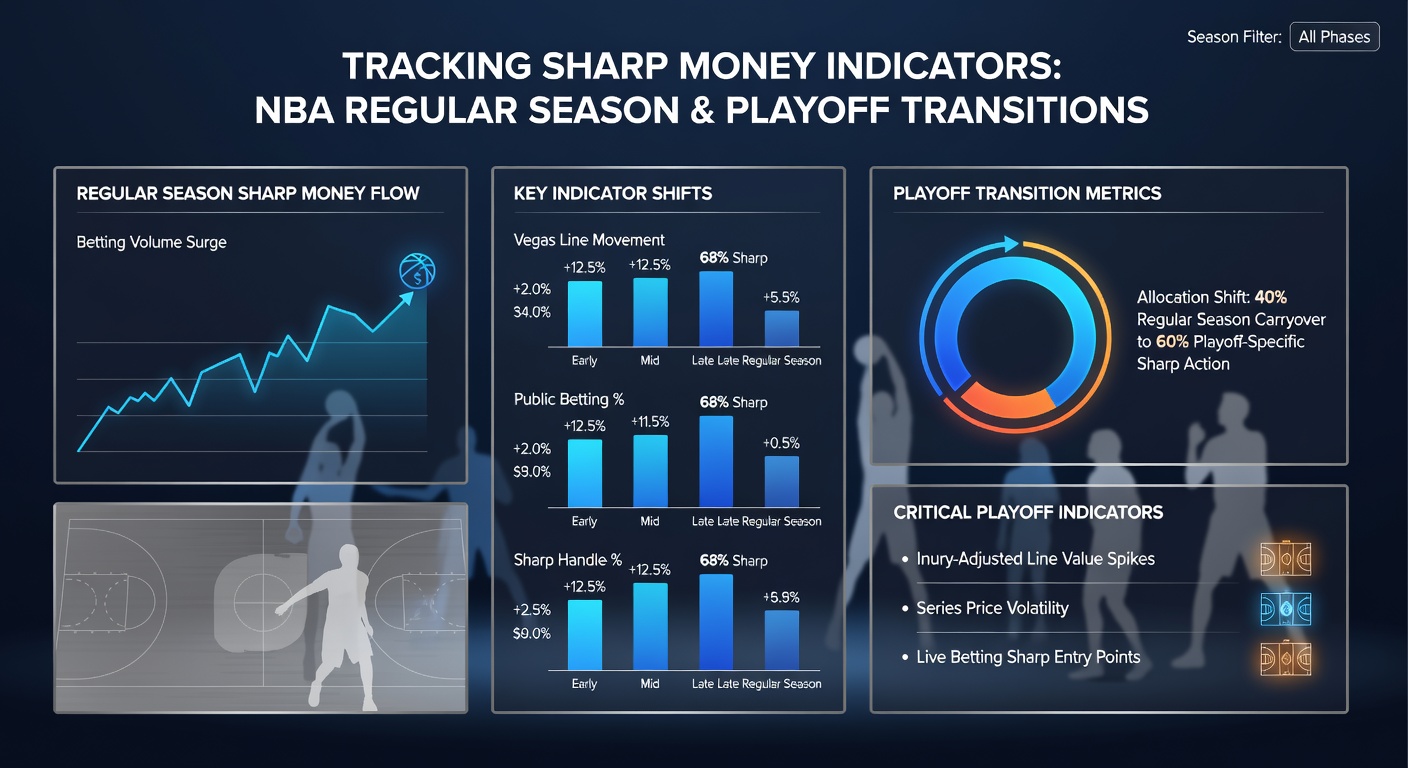
One study from the University of Nevada, Las Vegas gaming research center found that sharp percentages on underdogs rose from 41 percent in the regular season to 57 percent during first-round series in the prior five postseasons. These shifts appear because oddsmakers widen lines to attract public money on favorites, creating value on the other side once sharp accounts identify inflated spreads. Live betting during playoff games shows accelerated sharp activity after halftime adjustments, particularly when teams fall behind by double digits yet remain within reach according to adjusted efficiency metrics.
Monitoring Tools and Data Sources
Betting syndicates rely on a combination of closing line value tracking and account-level percentage splits that sportsbooks release in aggregated reports. Platforms that aggregate line history across multiple books allow observers to spot discrepancies where sharp money has already influenced pricing in one market but not others. Those who follow these patterns record that the largest moves during playoff transitions occur between Games 3 and 4 of a series, when public bettors chase prior results while sharp money locks in value on series prices.
Industry reports from the American Gaming Association highlight that handle on NBA playoff futures grew 19 percent in April 2026 compared with the same period in 2025, driven partly by sharp syndicates reallocating bankrolls from regular-season props. This reallocation creates ripple effects in related markets such as awards betting, where sharp money often moves totals on statistical categories once playoff rotations stabilize.
Practical Tracking Approaches
Analysts who follow sharp indicators maintain spreadsheets that log line opens, closes, and the timing of major moves relative to news events. They cross-reference these with public betting percentages published by sportsbooks and note when reverse line movement coincides with known sharp account activity. During the 2026 playoffs, such tracking revealed that sharp money landed on the under in 62 percent of games where teh total moved more than two points after the initial release.
External data feeds from European betting exchanges provide additional context because sharp action often originates overseas before reaching U.S. markets. Observers combine these feeds with domestic injury databases to isolate true sharp signals from noise created by recreational bettors. The result is a layered view that distinguishes between early sharp money, which sets the tone, and late public money that simply follows the adjusted lines.
Conclusion
Sharp money indicators across the NBA regular season and playoff transitions reflect evolving market dynamics shaped by schedule, injuries, and series-specific adjustments. Tracking these signals requires attention to line movement timing, account-level data, and cross-market correlations that appear consistently in historical records. As the 2026 postseason continues, patterns established during the regular season offer a baseline for identifying where professional betting activity diverges from public trends.