Tracing Capital Shifts Between Equine Racing and Association Football Markets
Jonas Russell · Jul 22, 2026
Tracing Capital Shifts Between Equine Racing and Association Football Markets
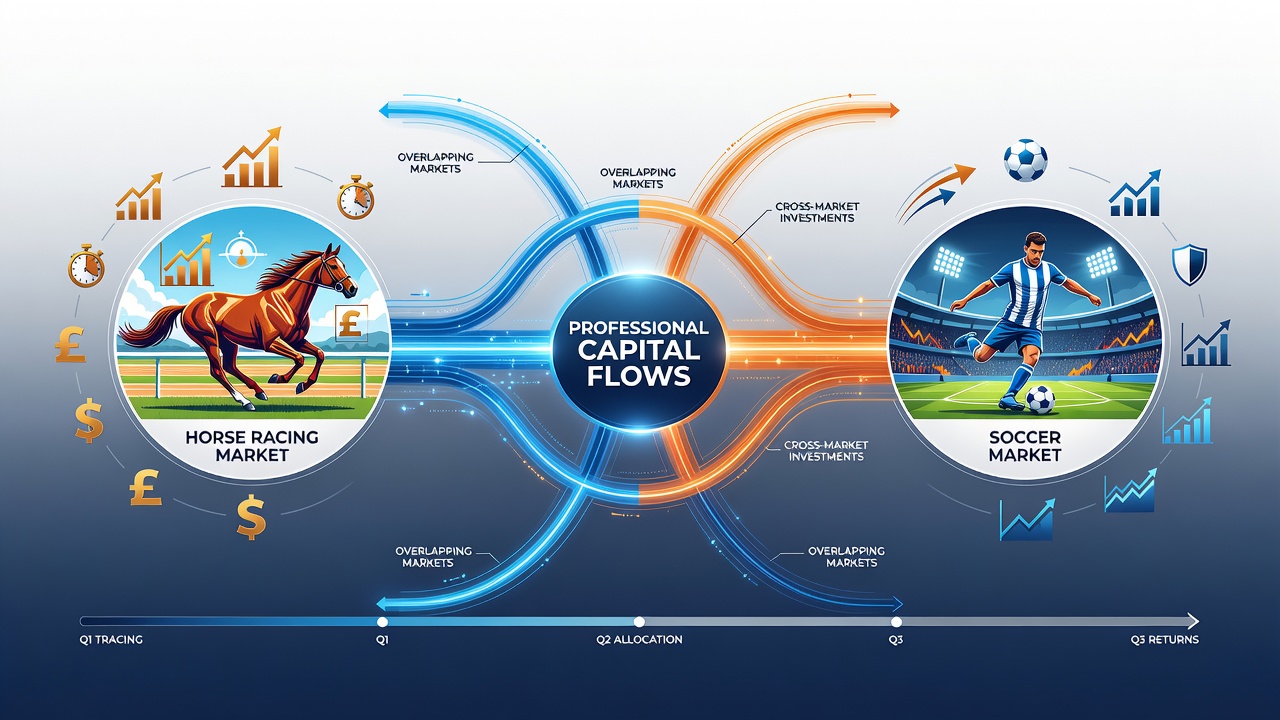
Professional capital moves through interconnected channels when horse racing meets overlap with major soccer fixtures, and observers note that these patterns have intensified during the 2026 calendar. Funds shift rapidly between the two sectors because event schedules create simultaneous liquidity windows, while syndicates exploit pricing discrepancies that emerge when one market slows and the other accelerates. Data from global operators shows consistent volume transfers during these periods, particularly when afternoon thoroughbred cards in North America coincide with evening European league matches.
Market Overlap Patterns in Mid-2026
July 2026 presents a dense schedule where Saratoga and Del Mar racing cards run alongside the final weeks of several European domestic leagues and pre-season friendlies, and analysts at research firms track how capital rotates across these windows. Bookmakers report that sharp money often exits one side when track surfaces change or when soccer lineups announce late adjustments, then re-enters the other market within minutes. This rotation occurs because many professional groups maintain unified bankrolls rather than separate allocations, allowing them to respond to live odds feeds across both verticals without delay.
Those who monitor exchange data observe that liquidity pools in soccer often absorb inflows when horse racing fields shrink due to scratches, whereas the reverse happens when soccer matches enter stoppage time and racing post times approach. Figures released by the Nevada Gaming Control Board for the second quarter of 2026 indicate that combined handle across these two categories grew 14 percent year-over-year during comparable overlap weeks, while individual market volatility remained elevated.
Mechanisms Driving Professional Fund Movements
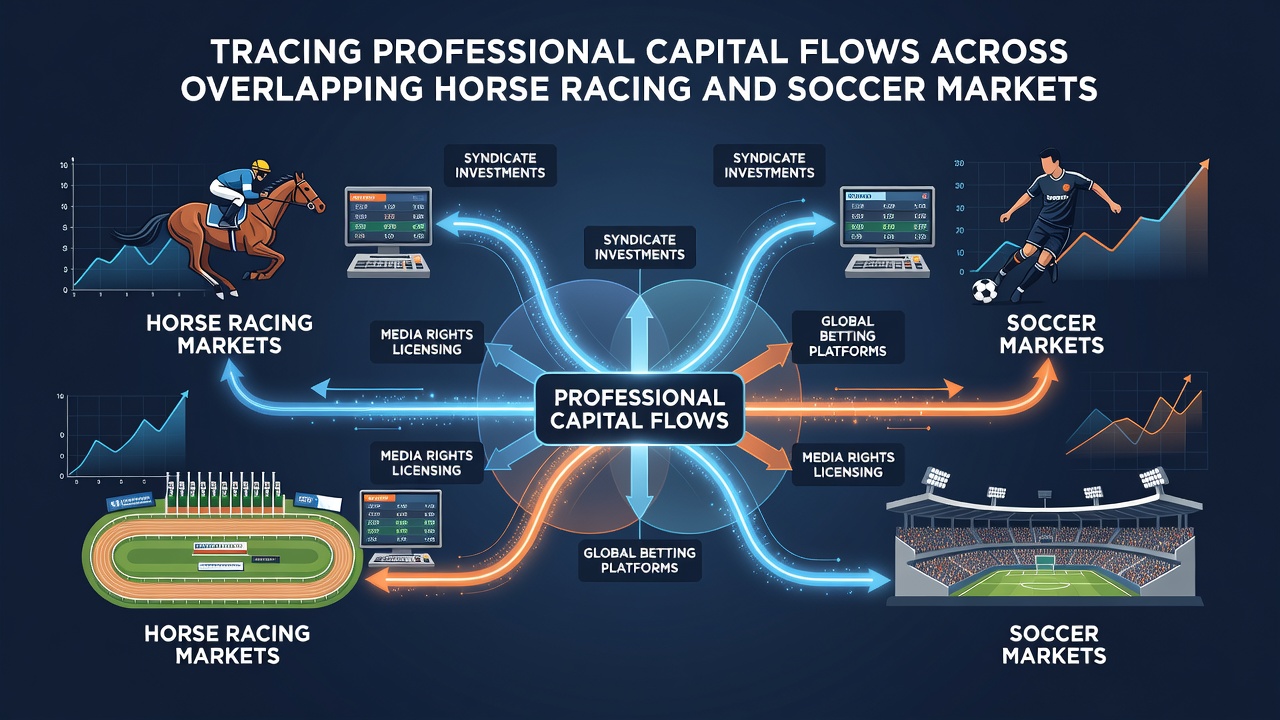
Syndicates employ algorithmic models that scan odds discrepancies across time zones, and these systems trigger transfers when implied probabilities diverge beyond set thresholds. Capital therefore travels from one jurisdiction's licensed operator to another's through corporate accounts or pooled resources, and the process leaves detectable footprints in volume spikes and line adjustments. Researchers at the University of Nevada, Las Vegas documented similar cross-market activity in earlier seasons, noting that groups with access to both racing and soccer feeds achieved faster reaction times than single-market participants.
Payment rails and settlement times further influence directionality, since certain racing tote systems clear faster than soccer in-play platforms during peak hours. Professional entities therefore route portions of their exposure through whichever channel processes withdrawals more efficiently on a given day, and this preference shifts when regulatory reporting requirements change in one region but not another. Observers note that July 2026 saw increased use of multi-currency wallets precisely to smooth these transitions between North American and European betting environments.
Regulatory and Reporting Considerations
Authorities in multiple jurisdictions now require operators to flag unusual cross-product transfers, and compliance teams use automated alerts when activity exceeds historical baselines for either horse racing or soccer alone. These measures emerged after several high-profile cases revealed coordinated wagering across the two markets that previously escaped single-product monitoring. The Australian Gambling Research Centre published findings in early 2026 showing that syndicates operating in both categories adjusted their reporting structures to meet new transparency rules without reducing overall activity levels.
Operators have responded by creating internal dashboards that separate professional from recreational flows, and these tools help identify when capital originating from one market appears in the other. Data shared at industry conferences this summer indicates that roughly 8 percent of large wagers in overlapping periods originate from accounts active in both verticals, a figure that rises during major racing festivals and soccer tournament stages. Such patterns prompt regulators to examine whether existing licensing frameworks adequately capture multi-product exposure.
Technological Infrastructure Supporting Transfers
Real-time data feeds now integrate odds from both horse racing totalizators and soccer exchanges into single interfaces, and professional teams rely on these unified views to execute rapid reallocations. Latency reductions achieved in 2025 and 2026 allow decisions that once required minutes to complete within seconds, tightening the window during which pricing inefficiencies remain exploitable. Several platforms introduced API endpoints specifically for cross-market hedging, and adoption rates among larger syndicates climbed steadily through the first half of 2026.
Security protocols also evolved to handle increased transfer volumes, with multi-factor authentication and transaction logging becoming standard for accounts exceeding certain thresholds. These safeguards reduce operational risk while preserving the speed required for live market participation, and they reflect broader industry movement toward standardized risk-management practices across product categories.
Conclusion
Capital continues to circulate between horse racing and soccer markets through established professional networks that respond to schedule overlaps and pricing signals. Regulatory reporting, technological integration, and data transparency measures have made these movements more visible without eliminating the underlying activity. As July 2026 schedules demonstrate, the patterns persist whenever major events in both sectors coincide, and monitoring systems continue to evolve alongside the flows they track.