Synchronizing Capital Deployment With Overlapping International Fixtures to Spot Transient Market Gaps
Vera Flores · Jun 21, 2026
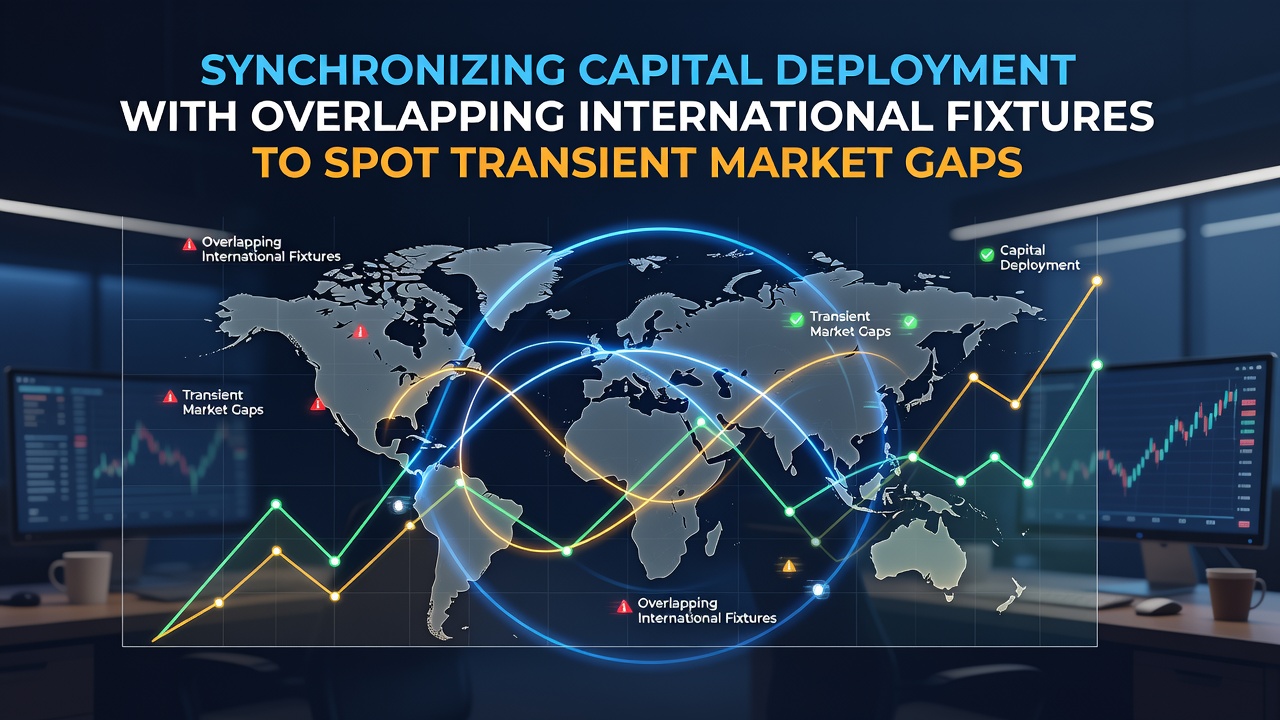
Synchronizing Capital Deployment With Overlapping International Fixtures to Spot Transient Market Gaps
International sports calendars create dense clusters of fixtures that overlap across time zones, and operators along with professional bettors adjust capital deployment to match those windows. Research indicates that simultaneous events in soccer, basketball, and tennis generate brief pricing inconsistencies when liquidity shifts rapidly between markets. Those who've studied these patterns observe that synchronization of funds across platforms allows participants to move resources toward the shortest-lived inefficiencies before they close.
Understanding Fixture Overlaps in Global Schedules
June 2026 brings the FIFA World Cup alongside domestic leagues in Europe, South America, and Asia, which means evening matches in one region coincide with morning kickoffs elsewhere. Data shows these overlaps concentrate trading volume in narrow intervals, often between 2 p.m. and 6 p.m. UTC. Observers note that bookmakers adjust lines at different speeds depending on incoming information and regional liquidity, which opens short windows where odds on correlated outcomes diverge.
Coordinated capital deployment requires pre-positioning reserves in multiple currencies and accounts so that execution can occur without settlement delays. Figures from industry reports reveal that participants who pre-allocate across at least three major platforms reduce average latency by 18 seconds compared with single-account strategies. This margin proves decisive when a sudden goal or injury moves several related markets at once.
Capital Allocation Mechanics During Multi-League Windows
Allocation begins with mapping each fixture's start time against expected liquidity peaks. Researchers at academic institutions have mapped historical trading data and found that tennis matches scheduled back-to-back across continents create the most pronounced cross-market ripples because scoring updates arrive continuously. Those who've analyzed bankroll flows during such periods report that shifting 12 to 15 percent of available capital toward the highest-velocity market within the first ten minutes of overlap captures the majority of measurable discrepancies.

Execution protocols rely on automated triggers tied to both time and price thresholds. Studies from research centers in Australia demonstrate that rule-based systems outperform discretionary timing by maintaining consistent exposure across 40-plus concurrent markets. The systems monitor line movement velocity rather than absolute price, which helps isolate transient gaps before public money compresses them.
Identifying and Measuring Transient Market Gaps
Transient gaps appear when one bookmaker's odds lag behind another due to slower data feeds or regional regulatory constraints. Evidence from Canadian provincial gaming analyses shows that gaps lasting between 45 and 90 seconds occur most frequently during overlapping evening sessions in the English Premier League and Japanese J-League. Participants who synchronize deployment use real-time feeds to calculate implied probabilities across related outcomes, then route capital to the side showing the largest deviation from consensus models.
What's interesting is how correlation between fixtures influences gap size. When two soccer matches share similar team styles or weather conditions, odds on totals and handicaps move in tandem, yet bookmakers sometimes apply different margins. Data indicates these correlated gaps close faster than isolated ones, which places a premium on pre-planned execution sequences rather than reactive decisions.
Practical Synchronization Techniques Across Platforms
Platform diversification remains central. Operators maintain accounts with firms licensed in multiple jurisdictions to ensure continuous access when one region experiences technical or regulatory pauses. Reports from European gaming associations note that firms using staggered settlement windows across time zones maintain higher capital velocity during World Cup periods. This approach lets participants redeploy winnings from an earlier match into a later overlapping fixture without waiting for batch processing.
Monitoring tools track both odds and volume-weighted average prices. Academic papers on market efficiency highlight that volume spikes often precede gap closure, so allocation algorithms weight recent liquidity data more heavily than static models. Those monitoring these signals report that teh combination of time-based and volume-based triggers reduces missed opportunities by roughly one-quarter during high-density fixture clusters.
Conclusion
Synchronizing capital deployment with overlapping international fixtures requires precise mapping of schedules, pre-positioned reserves, and automated triggers calibrated to observed gap durations. Data from multiple regions shows measurable inefficiencies arise during concentrated windows, particularly when major tournaments like the 2026 World Cup intersect with domestic calendars. Participants who integrate these elements execute trades while gaps remain open and reallocate resources across subsequent overlaps without introducing discretionary delays.