Strategic Stake Allocation Across Multi-Event Sessions to Address Market Pricing Variations
Henrik Fischer · Jul 19, 2026

Strategic Stake Allocation Across Multi-Event Sessions to Address Market Pricing Variations
Market observers note that pricing inefficiencies emerge regularly when bettors place wagers across several events in a single session, and coordinated stake distribution offers one approach to target those discrepancies. Research from industry reports shows that odds on correlated markets can diverge by 3 to 8 percent between operators during peak evening slates, creating windows where adjusted allocations may align with observed value. Data from July 2026 indicates these gaps appear most frequently in soccer, basketball, and tennis schedules that overlap across time zones.
Identifying Sources of Pricing Variation
Operators set lines independently based on their own risk models, customer flows, and liquidity constraints, which leads to inconsistencies even when events share similar characteristics. One analysis of European soccer fixtures found average spreads of 0.25 goals between major platforms during July 2026 tournament play. Those who monitor multiple books simultaneously often record these differences through automated alerts or manual comparisons before committing capital.
External factors such as injury news, weather updates, and late roster changes can widen the gaps further. Studies compiled by academic researchers at the University of Nevada Reno demonstrate that live odds adjustments lag behind public information by an average of 90 seconds on high-volume markets. Coordinated stake planning incorporates these timing elements by sequencing bets across events rather than treating each wager as an isolated decision.
Methods for Distributing Stakes
Participants who structure allocations across sessions typically begin with a fixed percentage of available capital for the overall session, then subdivide that amount according to the size of each identified discrepancy. A common pattern involves assigning larger portions to the clearest inefficiencies while reserving smaller amounts for events where the margin appears narrower. This approach allows the total exposure to remain controlled even as the number of active wagers increases.
Software tools that aggregate odds from multiple sources now support real-time calculations of implied probabilities and potential returns. Figures from the American Gaming Association reveal that adoption of such platforms grew 18 percent among professional bettors between 2025 and mid-2026. Those platforms enable users to input target returns and automatically suggest stake sizes that maintain consistent risk across the session.
Practical Application in Overlapping Markets
Consider a July 2026 evening where NBA summer league games run alongside ATP tennis matches. Pricing on player props in basketball may differ from implied totals derived from tennis set betting. Observers who track both markets simultaneously can adjust individual stakes so that the combined position reflects the largest available margin rather than the average margin. This requires recalculating after each confirmed wager because book limits and line movements alter the available edge.
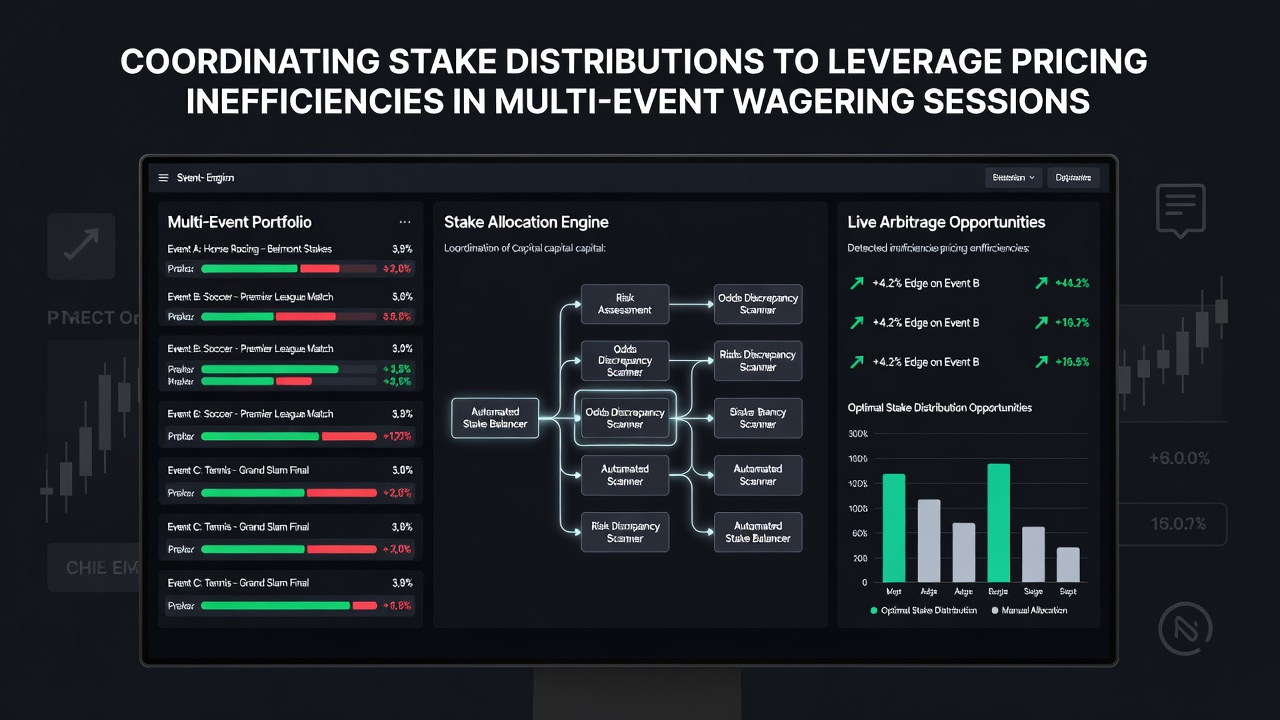
Regulatory data released by the Nevada Gaming Control Board shows that handle on multi-leg sessions increased 12 percent year-over-year through the first half of 2026. The same report notes that operators have responded by tightening limits on correlated selections, which in turn pushes some participants toward earlier stake placement and more precise distribution planning.
Tracking Outcomes and Adjusting Allocations
Long-term records compiled by independent research groups indicate that sessions with pre-planned stake ratios produce more stable return distributions than those assembled on an ad-hoc basis. One dataset covering 14 months of multi-event activity found a 2.1 percent improvement in session-level yield when participants applied fixed allocation rules versus discretionary adjustments. The improvement held across different sports and operator combinations.
Yet the same records also reveal that market conditions shift quickly. Lines that appear inefficient at the start of a session may normalize after early money arrives, requiring rapid reallocation of remaining capital to other events. Those who maintain flexible reserve percentages within the overall session budget can respond without exceeding predetermined exposure limits.
Conclusion
Coordinating stake distributions across multi-event wagering sessions represents one documented method for engaging with observed pricing inconsistencies. Available data from regulatory bodies and industry analyses show measurable differences in odds across operators, and structured allocation approaches have been associated with more consistent session outcomes in recorded samples. Continued monitoring of market behavior through July 2026 and beyond will determine how these patterns evolve as operator tools and participant strategies develop in parallel.