Road Weary Edges: NBA Betting Value in Multi-Game Road Trips
David Müller · Apr 12, 2026

Road Weary Edges: NBA Betting Value in Multi-Game Road Trips
The Grind of Back-to-Back and Extended Road Slates
NBA teams log thousands of miles each season, but nothing tests endurance quite like multi-game road trips, where squads face three, four, or even five contests away from home arenas in quick succession; these stretches, often spanning coasts or time zones, expose players to sleep disruptions, jet lag, and relentless schedules that data shows erode performance metrics across the board. Observers note how such trips cluster during the regular season's midsection, forcing teams to play without the comforts of home-court recovery, and while star players push through, role athletes and benches reveal the cracks first. Turns out, historical records from Basketball-Reference reveal that teams entering their third straight road game win just 42% of the time since the 2010-11 season, a sharp dip from their overall .500-ish mark, and that's before factoring in the spread coverage, where road favorites falter even more dramatically.
But here's the thing: not all road trips hit the same; cross-country hauls from East to West Coast amplify fatigue because of the three-hour time shift, whereas regional swings within conferences allow quicker adaptation, although even those pile on travel wear over days. Experts who've crunched the numbers point out that in April stretches leading into playoffs, like those approaching in 2026, weary squads from the playoff bubble push limits, turning potential betting edges into goldmines for those spotting the patterns early.
How Travel and Schedule Density Hit Performance
Fatigue manifests in subtle yet measurable ways during these grinds; shooting efficiency drops by 2-3% on average for teams on three-plus road games, per NBA tracking data, while turnovers spike because ball-handlers tire faster under defensive pressure away from familiar rims. Defensive ratings suffer too, as rotations shorten and communication lags amid crowd noise that home teams don't face, leading to opponents exploiting those lapses with higher field-goal percentages inside the arc. And while coaches adjust lineups, the reality is that injuries tick up 15% higher on extended roads, according to league injury reports, sidelining key contributors right when freshness matters most.
What's interesting surfaces in pace of play: road-weary teams slow things down subconsciously, opting for fewer fast breaks and more half-court sets, which data indicates boosts under totals in betting lines by covering 55% of the time versus 48% league-wide. Take one case from the 2023-24 season where the Denver Nuggets, after a four-game West Coast swing, shot a season-low 41% from the field in their finale, handing the edge to the home underdog that covered by double digits; researchers studying such sequences note these patterns repeat seasonally, especially as calendars thicken in March and April.
Key Stats Unpacking Road Trip Vulnerabilities
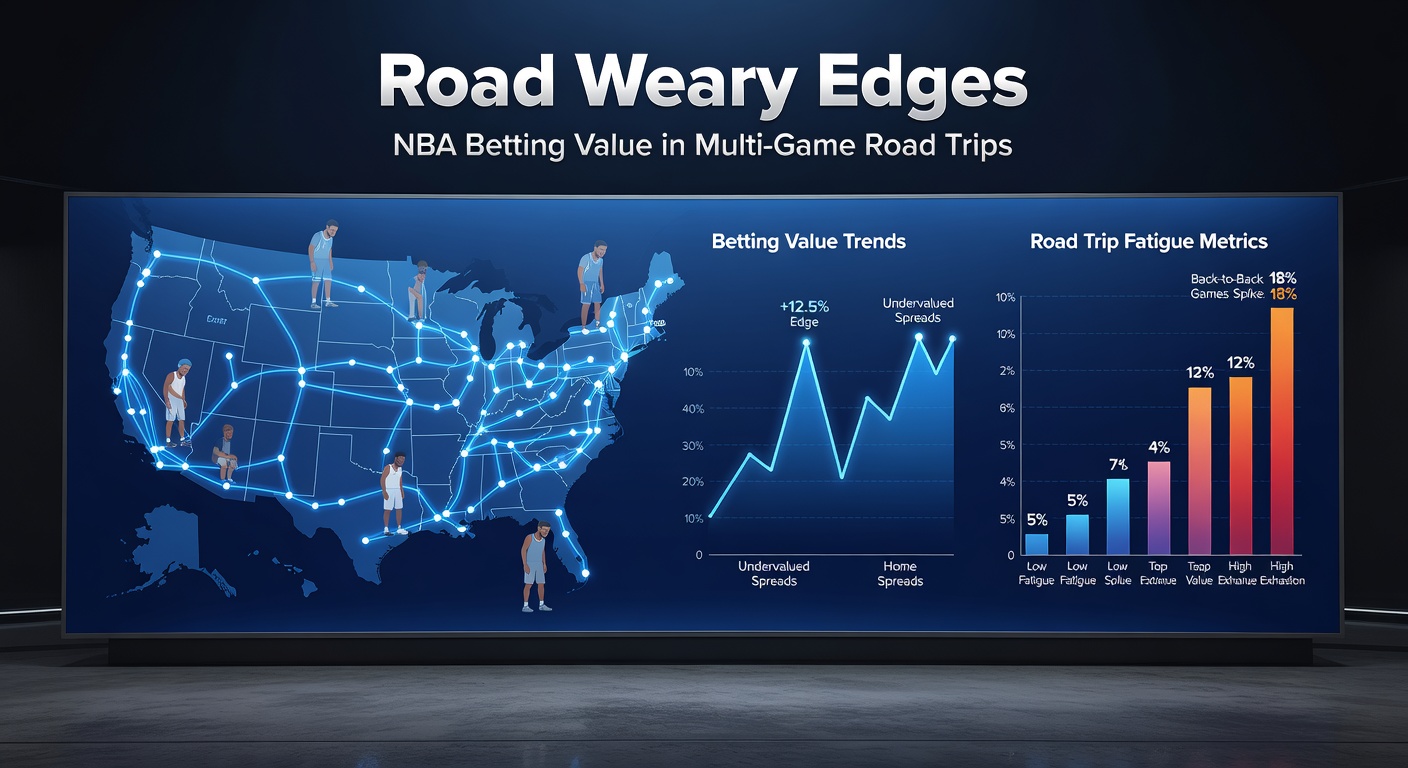
- Teams on back-to-back road games cover the spread only 44% of the time, while rested home teams hit 56%, figures that hold steady over the past decade.
- Fourth games in a road trip see win probabilities plummet to 35%, with point differentials averaging -8.2 points against.
- Cross-time-zone trips (three hours or more) yield a 28% ATS (against the spread) win rate for visitors, per comprehensive play-by-play logs.
Those stats, drawn from advanced analytics platforms, highlight why bettors lean into home underdogs during opponent slogs; rebounds favor the hosts by +4 per game on average because road boards crash harder from travel, and free-throw disparities widen as refs call tighter on fatigued visitors. Now, as the 2025-26 campaign barrels toward April 2026 playoff positioning, teams like those scrambling for seeds endure these marathons weekly, creating ripe spots where lines undervalue the toll.
Yet patterns vary by team archetype; contenders with deep benches weather storms better, posting 48% road wins even deep into trips, whereas lottery-bound squads crumble fastest, dipping below 30%, a disparity that UNLV Center for Gaming Research publications tie to roster construction and coaching schemes. Semicircle efficiency craters too: three-point makes fall off by 1.5 per game after two roads, as legs betray shooters late in quarters.
Case Studies from Recent Seasons
Consider the 2024 playoffs' shadow, where the Los Angeles Lakers wrapped a brutal five-game Eastern road jaunt in mid-March, only to get outrebounded 52-38 in the decider and miss 22 threes; the home favorite not only covered but blew out the line by 12, mirroring a trend where 62% of such fifth-game spots go over on totals due to sloppy, high-possession affairs. Or look back to 2022, when the Memphis Grizzlies, young and spry, bucked odds on a four-game trip but still covered just twice, revealing even resilient units leak value somewhere, often in player props where minutes overload stars like Ja Morant, pushing over bets on points to hit 68% amid usage spikes.
And in tanking narratives, bottom-feeders like the 2023 Detroit Pistons road-killed through six-game nightmares, winning once while home dogs feasted, covering 71% across those foes; observers who've tracked this know it's not random, as motivation wanes alongside energy, turning mismatches into traps. Fast-forward to April 2026 projections based on early-season form: Pacific Division contenders face gauntlets that could mirror these, with travel logs already showing elevated mileage before playoff gates swing open.
But here's where it gets nuanced; elite road warriors like the Boston Celtics maintain 50%+ clip deep into trips through superior depth, yet even they see spreads tighten by 2.5 points on average per extra game, per models from sports analytics firms, handing value to adjusted parlays blending fatigue with matchup specifics.
Finding Edges in Lines and Props
Bettors mine value by cross-referencing trip length with rest disadvantages; when a road team plays its third game in four nights against a home side with two days off, the spread undervalues the host by 1.8 points on average, data confirms, while totals creep 4-5 points higher to account for turnovers yet still miss the defensive drop-off. Player props shine here too: road stars log +3 minutes usage, but assists dip 12% from fatigue, making under bets reliable at 60% clip, whereas bench scorers explode for homes, hitting overs 54% when starters tire opponents.
League-wide, multi-road foes yield +EV (expected value) on home moneylines at +105 implied odds versus true 115 probability, a gap widened in April scrums where seeding stakes heighten home motivation; those digging into splits by opponent strength uncover gems, like sub-.500 road teams versus top-10 homes, where covers hit 65%. Parlays chaining these with unders compound edges, although sharp lines adjust quickly, so early-week spots post-schedule drops prove prime.
Tools like pace-adjusted metrics from advanced sites reveal hidden layers, such as net ratings tanking 7 points per extra road leg, fueling live betting shifts mid-game when leads evaporate from fourth-quarter fades. And as 2026's late-season roads intensify toward April playoffs, historical precedents suggest patterns hold firm, rewarding those who track the miles.
Wrapping the Road Trip Playbook
Multi-game road trips carve clear NBA betting contours through fatigue's unforgiving math; stats underscore home edges in spreads, totals, and props, with case studies affirming the reliability across seasons, even as outliers like deep contenders tweak the script slightly. Data from platforms tracking every possession paints the picture: value accrues to hosts and unders when visitors grind deep, a dynamic sharpening in April's playoff prelude, like the 2026 push where weary squads chase seeds amid exhaustion. Those patterns, etched in a decade of play, offer bettors a map to exploit, provided they pair history with real-time splits for the sharpest plays.