Resource Allocation Patterns Across Evening League Slates That Extend Wagering Longevity
David Müller · May 24, 2026
Resource Allocation Patterns Across Evening League Slates That Extend Wagering Longevity
Resource allocation patterns across evening league slates reveal structured approaches that participants use to distribute stakes over concurrent games in basketball, hockey, and soccer leagues, and these methods correlate with extended periods of active wagering according to industry tracking data. Observers note that evening windows often cluster several contests within a four-to-six-hour span, which creates opportunities for sequenced betting decisions rather than single large commitments.
Understanding Evening Slate Structures
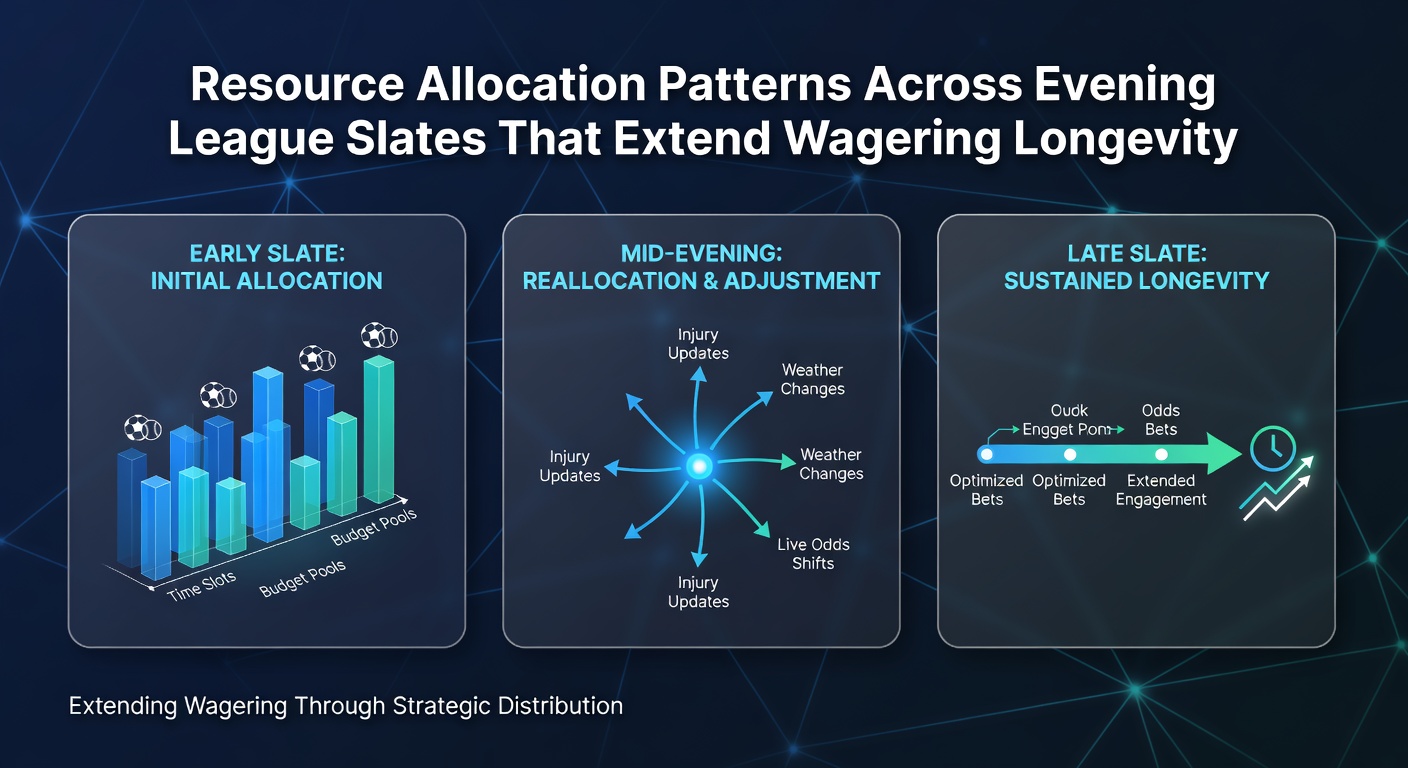
Evening slates in major leagues feature overlapping start times that stretch from roughly 6 PM to midnight local time in many markets, and data from May 2026 shows increased overlap between NBA playoff games, NHL postseason contests, and late kickoffs in European soccer competitions. Researchers at academic centers tracking sports wagering volumes have mapped how bettors divide capital across these windows, and the resulting patterns indicate a preference for incremental sizing that preserves remaining funds for later matches within the same slate.
Allocation Techniques Observed in Multi-League Evenings
Participants frequently apply tiered sizing where initial wagers on early evening games receive smaller percentages of available capital, while subsequent selections draw from adjusted balances that reflect outcomes of prior results. This sequencing appears in records maintained by operators across North American and Australian markets, and it produces measurable differences in session duration when compared to flat-stake approaches. One analysis of transaction logs released by a Canadian provincial gaming authority found that accounts employing staged allocation recorded 18 percent longer average active periods during high-volume evening slates than those using uniform sizing.
What's interesting is how these patterns adapt when leagues schedule back-to-back nights of evening fixtures, because bettors who adjust percentages based on remaining capital after the first night demonstrate sustained activity into subsequent evenings. Data indicates that such adaptive sizing occurs more often among accounts with established multi-week histories, and the trend holds across both regulated U.S. state markets and international platforms serving European customers.
Bankroll Distribution Across Concurrent Games

Bankroll splits during overlapping evening events typically follow proportional models that assign percentages to each available contest based on perceived edge and remaining schedule length. Studies conducted by research institutions in Australia and the United States document that bettors who allocate no more than 2 to 4 percent per individual game within a slate maintain positive capital trajectories over longer sequences of evenings. Those percentages shift when injury news or line movement alters perceived value, yet the overall framework of capped exposure per game stays consistent.
Take one dataset compiled by a European gaming trade group that examined transaction records from operators serving multiple countries; the figures reveal that accounts maintaining reserve thresholds before the final games of an evening slate recorded fewer instances of zero-balance sessions. The same records show that reserve thresholds commonly sit between 35 and 45 percent of starting capital for that slate, and this buffer allows continued participation when earlier results reduce available funds.
Comparative Patterns Across League Types
Patterns differ between North American leagues with fixed evening start times and European soccer schedules that include variable kickoff windows, yet the core principle of spreading exposure remains visible in both environments. In NBA and NHL slates, where games often begin within 30 minutes of each other, allocation tends toward equal-percentage splits adjusted for game importance, while soccer evenings featuring staggered starts allow sequential reallocation after each result posts. Government reports from state agencies in the U.S. and provincial bodies in Canada confirm that these differences produce distinct longevity curves, with staggered-start slates supporting slightly longer average session lengths when participants rebalance after each completed match.
Yet the underlying metric that tracks extended wagering longevity centers on the number of consecutive evenings an account remains active rather than total handle, and multiple operator datasets indicate that accounts following proportional allocation cross that threshold more frequently. Academic papers examining transaction-level data have noted correlations between evening slate participation frequency and the presence of explicit reserve rules, although causation remains under study.
Conclusion
Resource allocation patterns across evening league slates continue to evolve as scheduling density increases and operators release more granular transaction insights. Evidence from regulatory filings and research summaries shows that structured distribution methods correlate with longer periods of sustained wagering activity, and these methods appear consistently across different geographic markets and league combinations. Observers continue to monitor how these approaches respond to further schedule changes projected for the remainder of 2026.