International Windows Trigger Liquidity Shifts Across Global Soccer Betting Markets
Vera Flores · Aug 19, 2026
International Windows Trigger Liquidity Shifts Across Global Soccer Betting Markets
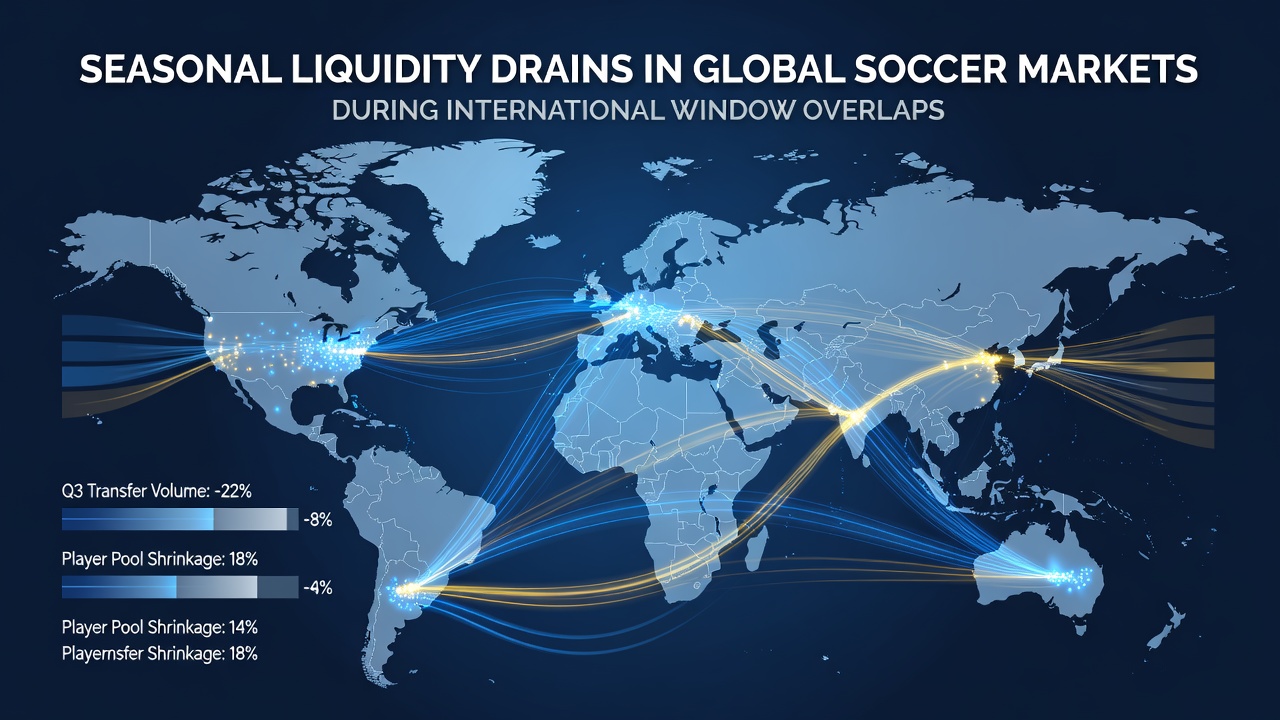
International windows create predictable patterns in soccer betting markets where liquidity moves away from club competitions toward national team fixtures and back again. These overlaps occur several times each season when FIFA and confederation calendars force club leagues to pause while players report for duty with their countries. Data from major European leagues shows average betting turnover on domestic matches drops between 25 and 40 percent during these periods according to figures compiled by the European Gaming and Betting Association.
Understanding the Mechanics of Liquidity Movement
Bookmakers adjust limits and odds when volume shifts because fewer active bettors focus on club soccer during international breaks. European leagues such as the Premier League, La Liga and Serie A schedule fewer high-profile fixtures while players travel which reduces sharp action and recreational wagers alike. Observers note that Asian markets often see the steepest declines since many bettors there follow European club soccer more closely than national team matches outside major tournaments. The result leaves thinner order books on club games and forces operators to widen spreads or lower maximum stakes until the window closes and attention returns.
August 2026 Patterns and Recent Overlaps
August 2026 presents a notable case because the FIFA international window overlaps with the start of several domestic seasons across Europe and South America. Leagues in England, Spain, Germany and Italy resume play while national teams compete in World Cup qualifiers and friendlies which splits attention and capital. Reports indicate that combined handle across major operators fell roughly 18 percent on club matches during the first week of that overlap compared with the prior month. Liquidity then recovered quickly once the window closed and club schedules returned to full strength with midweek European competitions adding fresh betting opportunities.
Regional Differences in Market Response
Markets in Australia and Canada show distinct reactions because local bettors often follow multiple leagues simultaneously. Data released by the Australian Competition and Consumer Commission highlights that turnover on English Premier League games declines more sharply than on domestic A-League matches during the same windows. Canadian regulators have observed similar splits where bettors shift wagers toward CONCACAF national team qualifiers when European club action pauses. These geographic variations create opportunities for operators who maintain separate risk models for different customer bases rather than applying uniform limits across all regions.
Impact on Odds and Risk Management
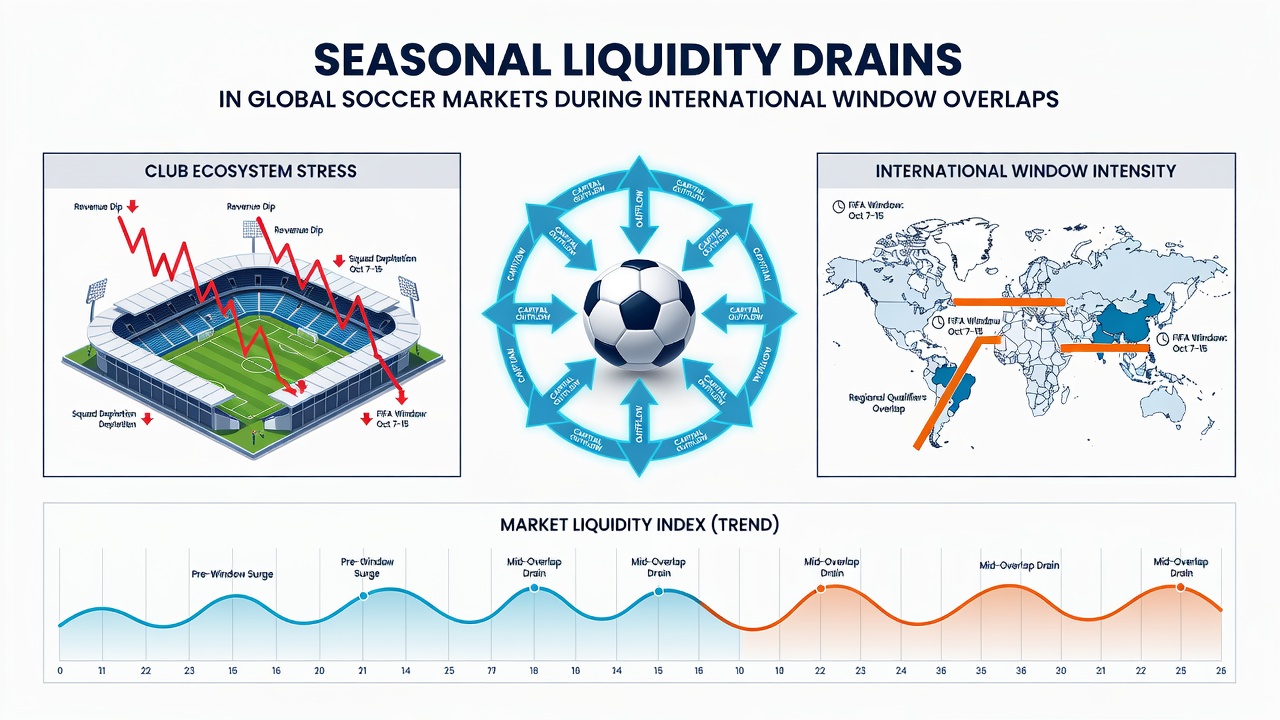
Odds compilers respond to reduced liquidity by widening margins on popular club markets while keeping tighter pricing on high-profile international fixtures that attract steady volume. Researchers at the University of Nevada Reno documented how this adjustment process leads to greater variance in closing lines during overlap periods because fewer sharp bettors participate to correct inefficiencies. Operators that maintain diversified books across multiple continents report lower overall exposure when they move capital toward international matches instead of attempting to force volume on thinned club slates. The pattern repeats each season with only minor variations tied to tournament importance and fixture congestion.
Long-Term Effects on Market Participants
Professional bettors who specialize in club soccer often reduce activity or migrate to other sports during these windows while recreational players remain active on national team games at lower stakes. Industry reports compiled over multiple seasons indicate that recovery in club market depth typically occurs within 48 hours after the international window ends and full league schedules resume. This cyclical behavior has become a standard input in risk models used by global operators who plan staffing and limit adjustments around the FIFA calendar rather than reacting after the fact.
Conclusion
Seasonal liquidity drains during international window overlaps follow consistent patterns across global soccer markets as attention and capital shift between club and national team fixtures. Operators track these movements through historical volume data and adjust risk parameters accordingly while regional differences continue to shape how markets respond in Europe, Asia, Australia and North America. The August 2026 overlap provides another clear illustration of how the calendar drives temporary reductions in club market depth followed by rapid recovery once domestic schedules resume without interruption.