Elevation's Influence on Scoring Patterns in Professional Basketball at High Altitudes
Vera Flores · Jun 24, 2026
Elevation's Influence on Scoring Patterns in Professional Basketball at High Altitudes
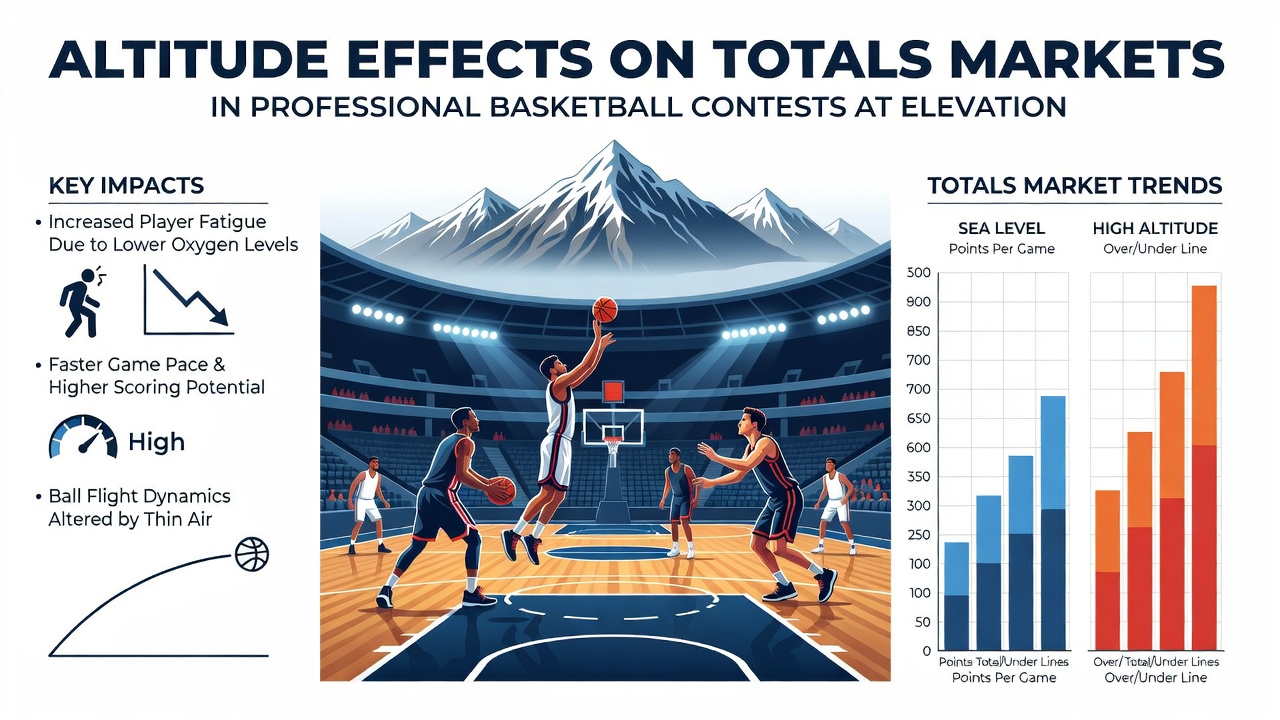
High-altitude venues create distinct conditions for basketball contests, and observers note measurable shifts in scoring totals that directly affect over/under markets. Research indicates thinner air reduces drag on the ball while simultaneously limiting oxygen availability for athletes, which alters both offensive output and defensive endurance over the course of a game. Data from multiple seasons shows these factors combine to produce totals that deviate from sea-level benchmarks in predictable ways.
Physical Mechanics Behind Altitude Adjustments
The basketball itself travels farther and faster in reduced air density, a phenomenon documented in studies of projectile motion at elevation. At the same time players experience earlier fatigue because each breath delivers less oxygen, which slows recovery between sprints and reduces defensive rotations in later quarters. Those who've tracked game logs find that first-half scoring often remains comparable to lower-elevation sites, yet second-half and overtime periods frequently see elevated point production as defenses tire.
League Data Patterns Across Venues
Teams based at or visiting 5,000-plus feet record average game totals roughly four to six points higher than league-wide norms according to aggregated box-score analysis. The Denver Nuggets home environment provides the clearest example, where regular-season contests have produced over results in a majority of games during recent campaigns. Visiting clubs that arrive without adequate acclimation periods show steeper drops in three-point accuracy and shot volume after halftime, further tilting the distribution of final scores upward.
Market Pricing and Sharp Money Response
Oddsmakers adjust totals upward for games scheduled at elevation, yet discrepancies persist when lines fail to fully account for specific roster compositions or recent travel schedules. Sharp bettors have historically targeted overs in Denver-hosted matchups involving teams with limited altitude experience, while unders appear more frequently when both clubs have multi-day acclimation windows. Figures released by sports analytics groups in early 2026 continue to highlight these edges, particularly during June playoff windows when fatigue compounds over consecutive high-altitude contests.
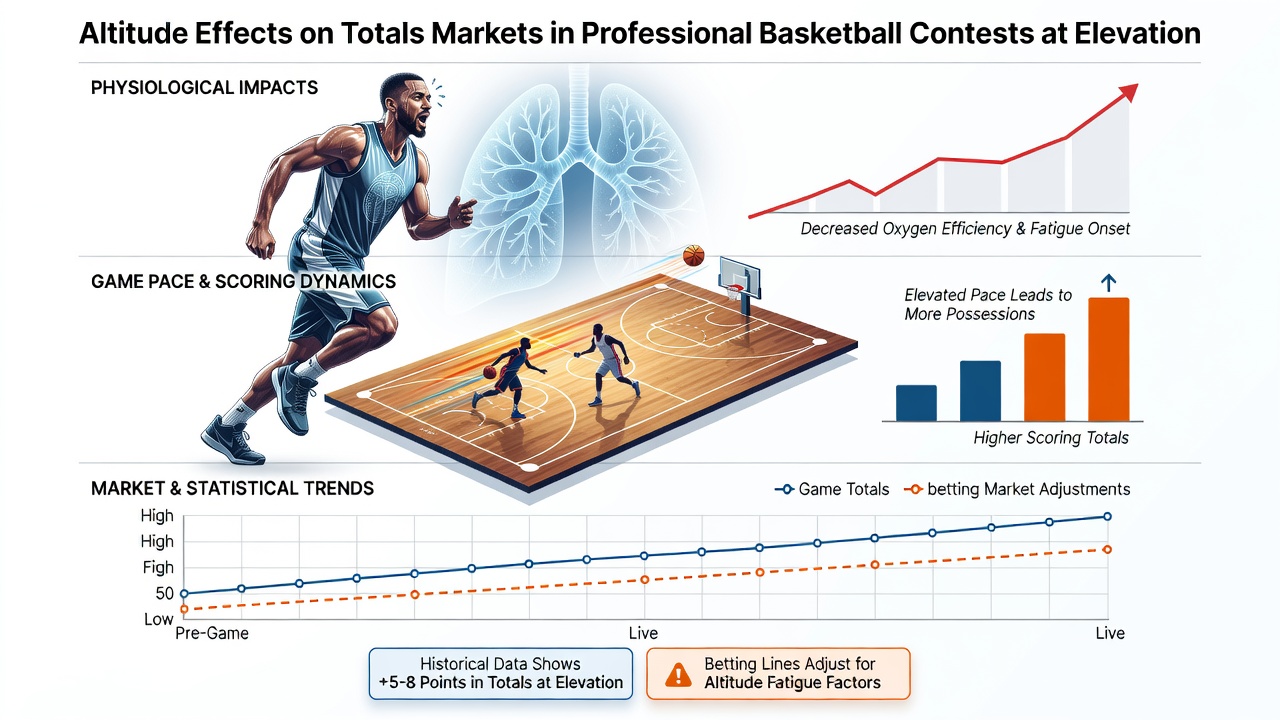
What's interesting is how live betting markets react once games tip off. Early overreaction to a hot-shooting first quarter can create mid-game value on the under when second-half defensive lapses become statistically likely. People who monitor real-time totals movement often find that lines drift higher after the opening period, reflecting public perception rather than the underlying physical realities that favor continued scoring.
Travel and Acclimation Variables
Schedule data reveals that teams flying directly from sea-level cities into Denver on game day post lower defensive efficiency ratings compared with clubs that train at intermediate elevations beforehand. Researchers tracking player-tracking metrics have observed reduced distance covered in the fourth quarter for non-acclimated rosters, which correlates with higher opponent transition scoring. These patterns hold across both regular-season and postseason samples, providing consistent inputs for totals modeling.
Broader Applications in Professional Circuits
International leagues that stage events at Andean or Himalayan venues report similar scoring inflation, although sample sizes remain smaller than NBA datasets. European basketball federations have begun incorporating altitude coefficients into their advanced metrics, allowing more precise pre-game total projections for clubs traveling across elevation gradients. The same principles apply to exhibition and summer-league games hosted at training sites above 4,000 feet, where early statistical trends mirror regular-season observations.
Conclusion
Altitude continues to shape professional basketball totals through measurable aerodynamic and physiological channels. Data sets compiled through 2026 demonstrate repeatable edges for bettors who isolate games at elevation and factor in travel logistics alongside on-court metrics. As more organizations integrate altitude-adjusted models into their projections, market efficiency may improve, yet current discrepancies still surface in both pre-game and in-game totals wagering.