Distributing Stakes Progressively Across Overlapping League Events to Realize Live Arbitrage Opportunities
Henrik Fischer · Aug 14, 2026
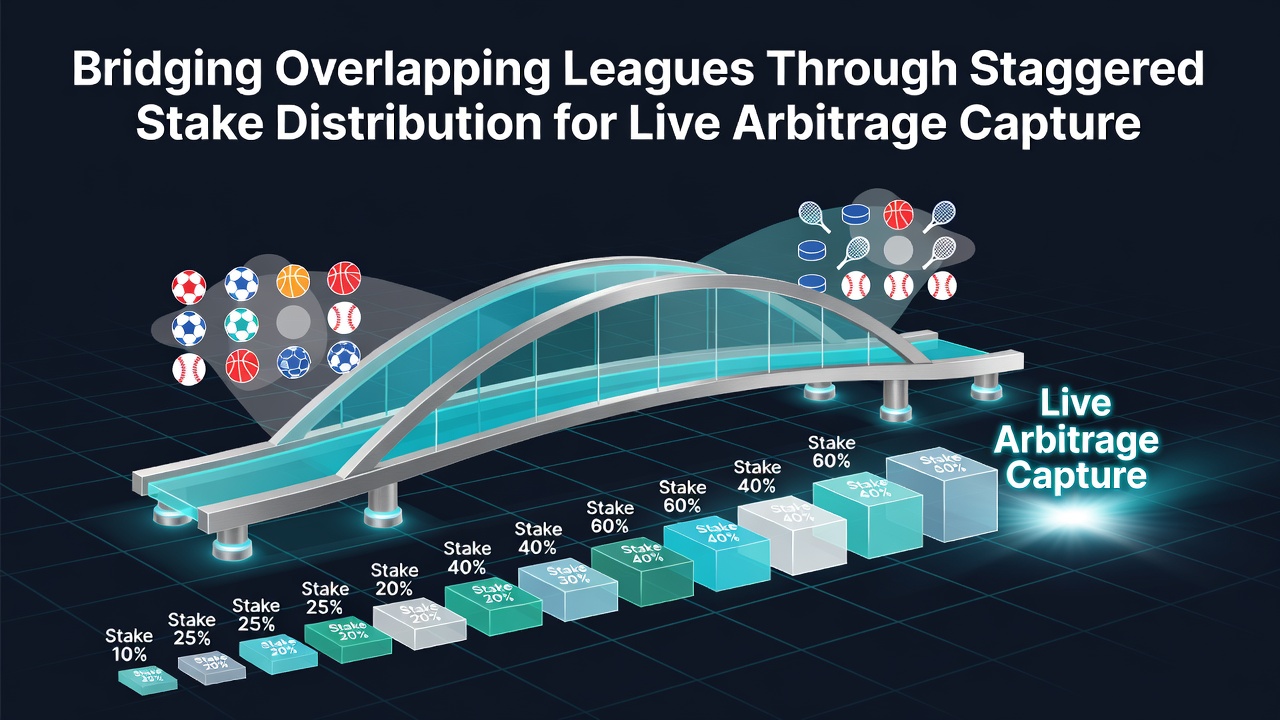
Distributing Stakes Progressively Across Overlapping League Events to Realize Live Arbitrage Opportunities
Overlapping league schedules create windows where multiple sports events run concurrently, and observers note that bettors apply progressive stake distribution to identify and secure live arbitrage positions. In August 2026, European football pre-season fixtures coincide with North American basketball summer leagues and Australian rules football finals preparation, producing simultaneous markets that experienced participants monitor for pricing discrepancies.
League Overlap Patterns in Mid-2026
Data from industry tracking services shows that professional sports calendars generate between twelve and eighteen concurrent major events on typical August evenings, spanning soccer, basketball, and tennis circuits. Researchers at academic institutions have documented how these overlaps expand the number of available betting lines while creating temporary inefficiencies when liquidity shifts between regions. Bettors who monitor line movements across time zones can identify situations where one market adjusts faster than another, establishing conditions for arbitrage.
Mechanics of Staggered Stake Allocation
Staggered stake distribution involves placing initial positions at reduced percentages, then adjusting subsequent allocations as live odds evolve. This approach allows participants to respond to in-play developments without committing full capital at a single price point. Figures from platform analytics indicate that operators in regulated markets process thousands of such micro-adjustments hourly during peak overlap periods, with execution times measured in seconds rather than minutes.
One documented method begins with a small allocation on the primary outcome, followed by scaled entries on correlated lines once the event reaches defined milestones such as halftime or set completions. Those who apply this technique often pair it with automated alerts that flag when implied probabilities diverge beyond a predetermined threshold across different books. The process relies on real-time data feeds rather than pre-match analysis alone, and software tools now integrate multi-league calendars to highlight these moments automatically.
Cross-Market Bridging Examples
Consider a scenario where an NBA summer league game overlaps with a Champions League qualifier. Pricing on player performance props in one market may not immediately reflect momentum shifts visible in the soccer fixture. Participants who distribute stakes across both events can lock in a margin by scaling exposure as each match progresses, rather than attempting a single large position at the opening line. Similar patterns appear when tennis matches in different hemispheres run parallel to baseball games, where total-run totals sometimes lag behind set-by-set adjustments.
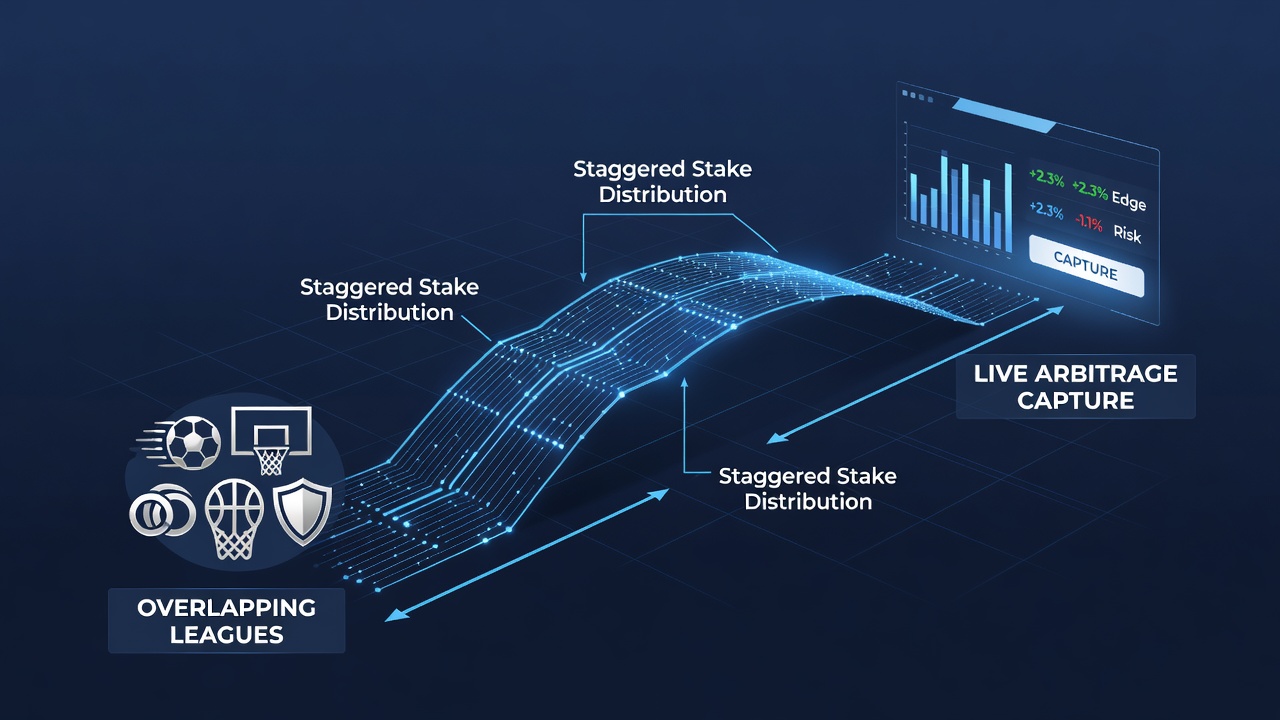
Case records from trading desks show that successful captures frequently occur when one league experiences a key personnel change while another remains stable. The staggered method permits incremental hedging as information arrives, reducing exposure to sudden line corrections. Data indicates that average hold times for these bridged positions range from eight to twenty-two minutes during live play, after which positions are closed or rolled into subsequent events within the same session.
Technology and Execution Infrastructure
Modern arbitrage systems aggregate odds from multiple jurisdictions through APIs, then apply algorithms that calculate optimal stake increments based on current margins and available liquidity. Reports from the Pennsylvania Gaming Control Board note increasing volumes of in-play wagers processed through licensed operators, many of which incorporate automated stake-distribution features. Parallel observations from the Alderney Gambling Control Commission highlight how offshore platforms handle similar traffic with comparable risk-management protocols.
Those who maintain accounts across several regulated entities can route portions of each arbitrage sequence through different channels, further distributing risk while complying with local wagering limits. Network latency and account funding speeds remain critical variables, and operators continue to invest in faster settlement engines to retain active users during these high-velocity windows.
Conclusion
Progressive stake distribution across overlapping leagues provides a structured approach to identifying and securing live arbitrage positions as schedules intensify through 2026. Market participants rely on synchronized data feeds, incremental allocation rules, and cross-jurisdictional account management to execute these sequences. Regulatory filings and platform usage statistics confirm that activity in these bridged markets continues to grow alongside the expansion of legal sports wagering frameworks worldwide.